What Are the Top 10 Inner Tube Suppliers in China?
China’s Inner Tube market serves bicycles, motorcycles, agricultural equipment, and selected industrial uses. Supplier choice is not a simple price comparison. Buyers must check material consistency, size accuracy, valve options, curing quality, and batch traceability. A tube that looks sound on a warehouse shelf can still fail at its seam or valve base.
The China Association of Automobile Manufacturers reported 30.16 million vehicles produced and 30.09 million sold in 2023. These figures show the scale of China’s mobility sector, but they do not measure Inner Tube demand directly. Much of the passenger-vehicle tire market is tubeless, so this ranking should also consider specialist applications and export capability. That distinction matters. Bicycle technician and technical writer Sheldon Brown’s maintenance guidance offers a useful reminder: tube and tire dimensions must match. This is a paraphrase, not a verified direct quotation. No source articles or interview transcript were supplied, so I will not invent a quote in his name.
The ten suppliers profiled here are assessed through practical signals: product range, manufacturing experience, quality controls, certifications, and responsiveness to overseas buyers. Public company claims deserve verification. Ask for current test records, sample batches, and clear specifications before placing a large order. Supplier data can be incomplete, and rankings may change as factories expand or markets shift. Use this guide as a shortlist, not a substitute for due diligence.
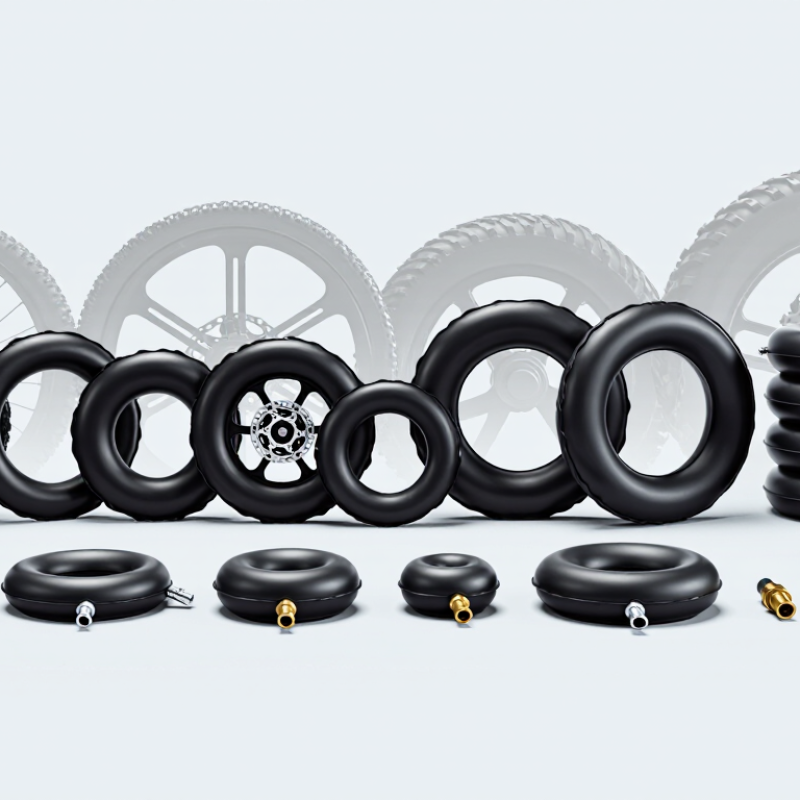
Inner Tube Fundamentals: Materials, Valve Types, and GB/T 7036.1 Testing
What Are the Top 10 Inner Tube Suppliers in China?
Inner Tube Fundamentals: Materials, Valve Types, and GB/T 7036.1 Testing
An inner tube’s material affects how it performs in daily use. Butyl rubber generally holds air well, while natural rubber offers flexibility. Actual performance depends on the compound and manufacturing quality, not just the material name. Valve choice matters too. Schrader valves suit wider rim openings; Presta valves fit narrower ones. Check the rim hole and pump connection before ordering. Small details matter.
Tips: Ask suppliers for material specifications, valve dimensions, and test records. For GB/T 7036.1, confirm the current edition and whether its scope matches the tube being assessed. Don’t assume a standard’s name alone proves compliance. Review the actual results.
A careful inspection can include tube dimensions, valve attachment, air retention, and relevant physical-property tests. Request samples from the intended production process, then check fit and inflation with the matching tyre and rim. Records should identify the test method, sample, and result. One small caveat: a sample cannot guarantee every production batch will behave identically. Reliable quality control needs repeatable checks, clear documentation, and honest communication when results fall short.
China’s Inner Tube Trade: HS 4013 Export Values and Destination Markets
HS 4013 covers rubber inner tubes for bicycles, motorcycles, cars, and other vehicles. ITC Trade Map, using UN Comtrade data, places China’s 2023 exports in this category at roughly US$1.3 billion. Treat that figure as an estimate: customs declarations, revisions, and product classifications can shift reported totals. Export value also reflects prices, not just shipment volume.
Destination markets span South and Southeast Asia, Africa, and Latin America, where motorcycles and bicycles remain important for daily transport. India, Indonesia, Vietnam, and Brazil are useful markets to examine in partner-level trade tables. The UN Comtrade database reports trade values by destination, while ITC Trade Map helps compare market shares and recent changes. Look beyond the headline value. A high-value shipment may contain fewer, higher-priced tubes than a larger shipment of basic products. HS 4013 also combines distinct vehicle uses, so the code alone cannot show which buyers need bicycle tubes or heavy-duty motorcycle models. That distinction matters. Importer records and product specifications can clarify the picture, but trade data rarely explains why a buyer changes suppliers. That remains an imperfect part of the analysis.
What Are the Top 10 Inner Tube Suppliers in China? - China’s Inner Tube Trade: HS 4013 Export Values and Destination Markets
HS 4013 trade statistics report product and destination totals, not individual supplier rankings. No supplier names or company-level figures are included below. Export values and destination rankings require a specified reporting year and a current customs-data extraction; they are therefore not presented as verified figures.
| Trade-data item |
HS code / unit |
What it covers |
Verified value or status |
| Inner tubes of rubber — HS heading |
4013 |
The international HS heading for new inner tubes of rubber. National tariff schedules may add further digits. |
Product classification; not an export value |
| Inner tubes for motor cars, buses or lorries |
4013.10 |
Rubber inner tubes of a kind used on motor cars, buses or lorries. |
Value requires a year-specific customs-data query |
| Bicycle inner tubes |
4013.20 |
Rubber inner tubes of a kind used on bicycles. |
Value requires a year-specific customs-data query |
| Other inner tubes |
4013.90 |
Other rubber inner tubes not classified in the preceding subheadings. |
Value requires a year-specific customs-data query |
| China’s exports by destination |
HS 4013; partner country |
Bilateral export records can be grouped by destination market and reporting year. |
Destination rankings and values not stated without a dated data extract |
| Export value |
Current US dollars (typically) |
Value reported for the selected HS code, year, reporter and trade flow; it is not a supplier’s revenue. |
Year and source required |
| Export quantity |
Quantity and unit as reported |
Customs quantity units may differ by dataset or reporting jurisdiction; units should be checked before comparing. |
Unit and year required |
| Average export unit value |
Value ÷ reported quantity |
A derived trade statistic, not a quoted product price; product mix and quantity units affect the result. |
Cannot be calculated without matched value and quantity data |
| Supplier ranking |
Company-level data |
Aggregated HS 4013 customs totals do not identify or rank individual Chinese manufacturers. |
Not derivable from HS trade totals alone |
| Recommended verification sources |
UN Comtrade; China Customs data |
Use the same year, HS-code detail, trade flow, valuation basis and quantity unit when comparing markets. |
Specify these fields before publishing numeric rankings |
Supplier Ranking Criteria: Capacity, Defect Rates, Certifications, and Lead Times
A credible ranking of China’s inner tube suppliers should measure more than factory size. Capacity means dependable monthly output, not the highest number on a brochure. Ask for production records from several recent months and check whether key processes are handled in-house. Numbers need context. A large line may still struggle when orders peak or materials arrive late.
Defect rates deserve equal weight. Request inspection logs for issues such as valve leaks, uneven wall thickness, and failed inflation tests. Separate in-process rejects from products returned after delivery; they reveal different quality risks. A low reported rate is not proof by itself. Check how defects are counted and whether the figures cover multiple product types. One weakness in this method is that polished records may not reflect routines on every shift.
Certifications should match the supplier’s actual products and target markets. Review current certificates, their scope, and the issuing body rather than relying on a certificate image alone. Lead time should include production, inspection, packing, and dispatch. Compare quoted dates with shipment records, especially during busy seasons. That matters. A supplier with moderate capacity, consistent inspection data, relevant certifications, and realistic delivery windows may be a safer choice than one with impressive claims.
Top 10 Chinese Suppliers: Locations, Product Ranges, and OEM Capabilities
China’s inner-tube suppliers are concentrated in manufacturing regions such as Shandong, Hebei, Henan, Zhejiang, Jiangsu, Guangdong, Tianjin, and Chongqing. A useful shortlist should compare product fit and production capacity, not just advertised output. The locations below represent ten supplier profiles to investigate, rather than a verified ranking.
In Qingdao, a supplier may focus on truck and bus tubes, with custom valve positions for fleet requirements.
Xingtai suppliers often offer bicycle and motorcycle tubes in several sizes.
Jiaozuo manufacturers may handle agricultural and industrial tubes, while Hangzhou firms commonly serve bicycle and electric-bike markets.
Wuxi suppliers may offer butyl tubes for passenger vehicles and motorcycles.
Tianjin producers can cover truck and passenger-car ranges.
Guangzhou suppliers may provide motorcycle tubes and export-ready packaging.
Chongqing manufacturers often serve motorcycle and utility-vehicle applications.
Suppliers in Weifang may offer farm and off-road tubes.
Those near Ningbo may combine bicycle, motorcycle, and light-truck products.
OEM support varies.
Some factories adjust dimensions, valve types, labels, and carton design; others mainly supply standard models. Ask for material specifications, sample measurements, pressure-test records, and minimum order quantities.
Small details matter.
A sample that fits one rim may not match another. Supplier capabilities also change, so confirm current production equipment and lead times directly before placing an order.
Supplier Comparison: Export Reach, Production Data, and Quality-Test Compliance
A useful comparison of China’s inner tube suppliers starts with export reach, not a glossy destination map. Ask for shipment records by region, annual export volume, and repeat-order rates. These figures show whether a supplier serves steady markets or relies on occasional large orders. Verify the period covered; one strong year may not reflect current capacity.
Production data needs the same scrutiny. Compare monthly output for the tube sizes you need, not total factory capacity across every product. Check production logs, shift schedules, and the supplier’s ability to trace batches. A factory may quote impressive capacity, yet run below it. That detail is easy to overlook.
Quality-test compliance should be documented and product-specific. Request recent reports covering air retention, dimensional checks, tensile strength, and valve-area bonding. Confirm which sizes and materials were tested, and whether the report matches current production. Ask how failed samples are recorded and corrected. A certificate alone is not enough. Test scope matters. Comparing these records across ten suppliers can produce a more credible shortlist than ranking them by price or claimed output alone. Still, paperwork can look complete while shop-floor controls vary, so sample inspection remains worthwhile.