How to Choose the Right Interior Tube for Your Tires
Choosing the right Interior Tube starts with the tire markings, rim design, and riding conditions. A tube labeled “700C” may look suitable, yet its width range or valve can make it incompatible. Fit matters. A narrow road tire, a loaded touring bike, and a mountain bike require different choices. This guide explains how to check those details before buying.
Respected bicycle technical expert Sheldon Brown explained that traditional tire-size labels can be inconsistent, making standardized ISO measurements more reliable. His guidance offers a useful starting point: read the numbers on your tire rather than judging its appearance. For example, 37-622 identifies a nominal tire width of 37 millimeters and a bead-seat diameter of 622 millimeters. Choose a tube whose stated size range includes that tire size. Then check whether your rim accepts a Presta or Schrader valve. Valve length matters, too, particularly with deep rims. Check twice.
Material choice adds another decision. Butyl tubes generally offer affordable replacements and good air retention. Latex and TPU options can reduce weight, but compatibility, inflation needs, and repair methods vary by product. Manufacturer instructions should guide those choices, especially when rim-brake heat or repair-kit compatibility is involved. There is no perfect option for every rider. Even a correctly sized tube can fail if installation traps it beneath the tire bead. The sections ahead cover sizing, valves, materials, and installation checks, helping you choose with fewer assumptions and avoidable mistakes.
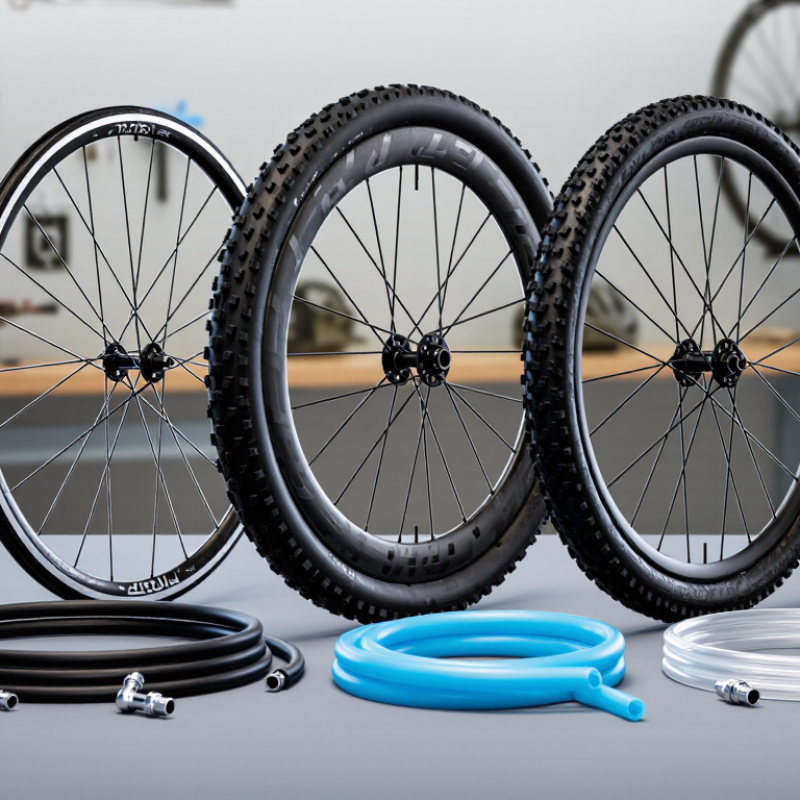
Understand Inner Tube Types and Tire Compatibility
The right inner tube must match your tire’s diameter, width range, and valve requirements. Check the sidewall. A tire marked 37-622 has a nominal width of 37 millimeters and a bead seat diameter of 622 millimeters. Choose a tube labeled for that diameter, with a width range that includes 37 millimeters. Labels such as “28-inch” can describe different diameters, so the millimeter designation provides a more dependable reference when comparing options. Guessing feels convenient, but I would check both markings before buying.
Butyl tubes are practical for everyday riding because they retain air well and usually accept standard tube patches. Latex tubes are supple and can reduce rolling resistance, although they need frequent pressure checks because air escapes relatively quickly. TPU tubes pack small and weigh little, making them useful spares when storage space matters. Compatibility still varies. Some lightweight tubes have restrictions involving rim brakes, installation pressure, or repair materials, so read their instructions before fitting them.
Match the valve to your rim’s hole and depth. Presta valves are narrower than Schrader valves, and deeper rims require longer valves or compatible extensions. A tubeless-ready tire does not automatically rule out using a tube; check the tire and rim guidance. During installation, add just enough air to give the tube shape. Inspect both tire beads before inflation to catch trapped tubing that could cause a pinch puncture.
How to Choose the Right Inner Tube for Your Tires
Understanding inner tube types and tire compatibility starts with tire size.
This chart compares the ISO bead seat diameters associated with five common
bicycle wheel size labels.
Match the ISO size first. In a tire marking such as
37-622, 37 indicates the nominal tire width in millimeters
and 622 indicates the bead seat diameter in millimeters. Select an inner tube
whose stated compatibility includes that diameter and tire width. Familiar
inch labels can refer to different ISO diameters, so check the tire sidewall
instead of relying on the inch label alone.
Then check the valve and tube material. Choose a Presta,
Schrader, or Dunlop valve that suits your rim and pump, with enough valve
length for the rim depth. Butyl, latex, and TPU tubes are available, but
size coverage and suitability vary by product. Follow the tube manufacturer's
guidance, including any restrictions for rim brakes or installation.
Data reference: ISO 5775 / ETRTO tire sizing. Values show bead seat diameter,
not tire outside diameter or the diameter of an uninflated tube. The inch
labels shown represent common examples and are not exhaustive.
Read Tire Markings to Find the Correct Tube Size
The correct inner tube size starts with the numbers molded into your tire’s sidewall. Wipe away dirt and rotate the wheel under a bright light. Look for markings such as 700 × 32C or 32-622. Read both carefully. In 32-622, 32 indicates nominal tire width in millimeters, while 622 identifies the tire’s bead seat diameter. That diameter must match the tube’s stated compatibility.
Tube packaging usually lists a width range because an inflated tube expands to fit several nearby tire widths. For a 32-622 tire, a tube labeled 28–35 mm with 622 compatibility would cover the required size. Check the full label. A package marked only “26-inch” leaves room for error because several incompatible tire diameters share that familiar description. If the markings are faded, checking the tire specification is more reliable than guessing from its appearance. A ruler measurement may seem helpful, but measuring the outside of an inflated tire cannot reliably establish its bead seat diameter.
Size markings do not answer every compatibility question. Check the valve too. A narrow Presta valve and a wider Schrader valve require compatible rim holes and pump connections. Deep rims also need enough exposed valve stem for the pump head. Choosing by size alone is tempting, and easy to regret when the pump cannot reach the valve.
Final Checks Before Choosing Your Tube
- Read the full size range: A tube label showing 18–25 mm widths for a 622 mm bead seat diameter includes a 25-622 tire, but excludes a 28-622 tire. Some tubes list more than one supported diameter; follow the complete compatibility information on the packaging.
- Check the valve type: Presta valves have a slender stem and a small threaded tip nut. Schrader valves have a wider stem, like those commonly used on cars. Choose the valve type intended for your rim’s valve hole.
- Check the valve length: The valve must extend far enough beyond the rim for the pump head to attach securely. Deeper rims generally require longer valves or compatible valve extenders.
- Distinguish wheel names from dimensions: 700C and 29-inch tires share a 622 mm bead seat diameter, but their widths can require different tubes. The 27-inch size shown above uses 630 mm, while 27.5-inch uses 584 mm.
- Check special compatibility requirements: Follow the tube manufacturer’s instructions for rim-brake use, rim materials, tubeless setups, and installation, particularly when choosing latex or TPU tubes.
- Set pressure using the tire and rim guidance: Tube sizing does not determine the correct riding pressure. Stay within the applicable tire and rim limits.
Match the Valve Type and Stem Length to Your Rim
A tube can match your tire size perfectly and still have the wrong valve for your rim.
Check the valve hole. Presta valves are narrow, typically 6 mm across, with a small threaded tip that opens before inflation. Schrader valves are wider, usually about 8 mm, and have a spring-loaded center pin. Match the existing valve type unless the rim manufacturer specifies another compatible setup. Never force a wider valve through a smaller hole. A narrow valve in an oversized hole may need an approved reducing grommet to prevent movement and chafing.
Rim depth determines how much valve stem you need. Measure from the rim’s outer surface to the valve base, or check the published rim depth. As a practical starting point, choose a stem roughly 15–20 mm longer than that depth. For example, a 40 mm-deep rim often works with a 60 mm valve. Check your pump. Some pump heads need more exposed stem than others, especially bulky locking designs. A valve that barely protrudes may leave too little room for a secure connection.
Longer is not automatically better, although a little extra length can make roadside inflation less frustrating.
The tidiest fit can be awkward with cold fingers; appearance is an imperfect guide here. Before riding, attach your pump and confirm it seals without pulling the valve sideways. Keep the stem straight, and tighten any retaining nut only gently by hand. If using an extender, check compatibility with the valve’s removable core and follow its installation instructions.
Compare Tube Materials for Your Riding Conditions
How to Choose the Right Interior Tube for Your Tires
Compare Tube Materials for Your Riding Conditions
Your riding conditions should guide your inner-tube choice. Butyl suits daily commuting, especially when dependable air retention matters more than weight. Latex suits riders chasing lower rolling resistance on smooth roads. Independent laboratory comparisons, published under “Road Bike Inner Tube Test,” measure performance at approximately 29 km/h with a 42.5 kg wheel load. Their results show that tube material can change rolling resistance by several watts per tire. Small differences matter. However, those controlled results cannot predict every pothole, tire casing, or pressure choice.
For long climbs or a crowded saddlebag, TPU offers low weight and a compact spare. Some lightweight road versions weigh around 30 grams; conventional butyl tubes often exceed 100 grams. These figures describe product categories, not guaranteed specifications. Check the actual weight. Latex remains attractive for fast rides, but usually needs more frequent pressure checks because air escapes faster. Butyl is often easier to repair using widely available patches. TPU typically requires compatible repair patches. There is a tradeoff. Choosing the lightest tube can feel clever until roadside repairs become awkward.
Tips:
Match the tube’s diameter and width range to your tire’s sidewall markings. ISO 5775-1:2023 standardizes bicycle tire sizing, helping distinguish similar-looking sizes. Check valve length against rim depth before buying. For rim-brake descents, confirm explicit heat compatibility, particularly with TPU. Check pressure before riding. I would also question any purchase based entirely on laboratory watts: a poorly fitted tube can undermine the expected benefit.
Check Tube Fit and Compatibility Before Installation
How to Choose the Right Interior Tube for Your Tires
Check Tube Fit and Compatibility Before Installation
Read the tire’s sidewall before choosing an inner tube. Match both the tire diameter and its width to the range printed on the tube packaging. For example, a 700 × 35C tire commonly carries the ISO size 35-622. A tube marked 700 × 28–38C may fit, provided its specified bead-seat diameter is also 622 mm. Check both numbers. Similar-looking wheel sizes can have different diameters, so appearance alone is unreliable.
Check the valve type against your rim’s valve hole and your pump head. Presta valves are narrower than Schrader valves, and they require compatible openings or suitable adapters where permitted. Never force a fit. Deep rims also need enough exposed valve stem for the pump to grip securely. Valve length is easy to overlook when the diameter and width already seem correct. For latex or TPU tubes, check the manufacturer’s brake-system restrictions and installation instructions; compatibility varies between products.
Tips: Before installation, inspect the tire’s interior for embedded glass, thorns, or sharp debris. Use a cloth carefully rather than sliding bare fingers across potentially sharp objects. Check that rim tape fully covers spoke holes and has no displaced edges. Add only enough air to give the tube shape, following any material-specific inflation limits. After seating the tire, inspect both sides for trapped tube sections before inflating to the recommended pressure.