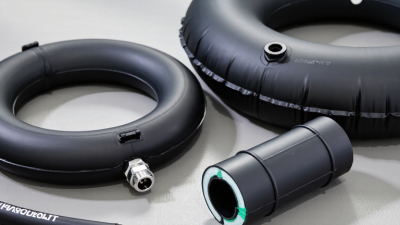

Choosing the right Natural Tube is a practical business decision, not just a branding choice. It affects product protection, filling speed, shelf appearance, shipping costs, and end-of-life handling. A tube that feels sturdy in the hand may still dent during transit. A natural-looking surface may also require coatings that complicate disposal. Details matter.
The OECD’s Global Plastics Outlook reports that global plastics production reached 460 million tonnes in 2019, while plastic waste reached 353 million tonnes. Only 9% of plastic waste was ultimately recycled. These figures describe plastics broadly, not Natural Tube packaging specifically. Still, they show why buyers should ask precise questions about material composition and recovery options. Ellen MacArthur, founder of the Ellen MacArthur Foundation, has described a circular-economy principle as “designing out waste and pollution, keeping products and materials in use, and regenerating natural systems.” That is a useful lens, not a guarantee that any tube is sustainable.
Start with the product itself. Will it hold dry goods, cosmetics, or delicate items? Check the tube’s dimensions, wall strength, closure fit, moisture resistance, and compatibility with your filling equipment. Request samples, then test them under real handling and shipping conditions. Compare supplier specifications with documented test results. Ask what coatings, inks, and adhesives are used, and whether recycling claims apply where your customers live. Sometimes the simplest design performs best. Yet trade-offs remain: stronger barriers can add material, while lighter tubes may need extra protection. This guide will help you weigh those choices and select a Natural Tube that suits your product, operations, and customers.
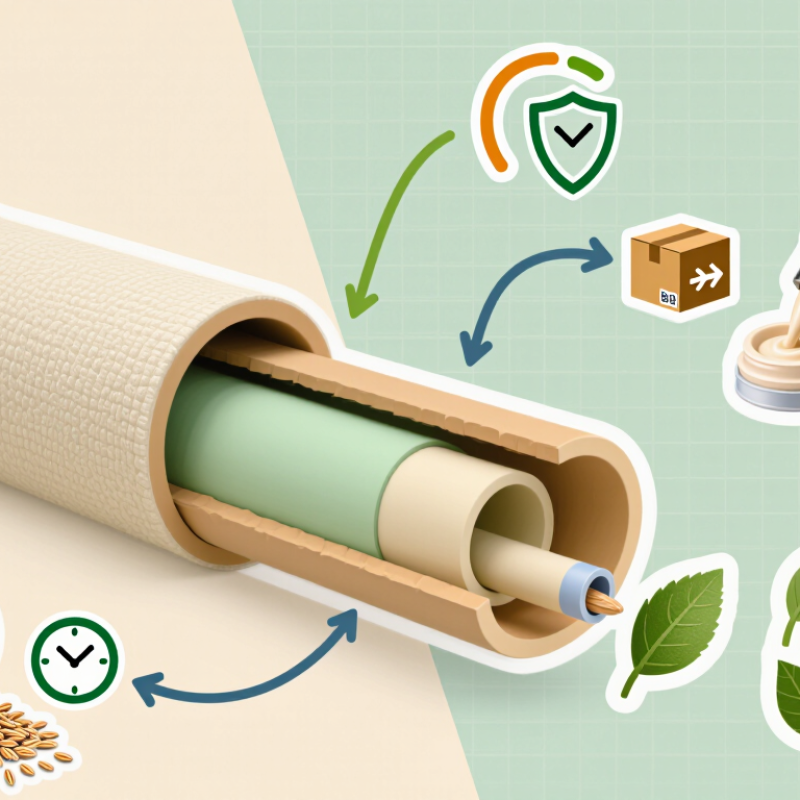
Before choosing a natural tube, define the product it must protect and the job it must perform. A tube for rolled posters faces different risks from one holding dry goods or retail merchandise. Record the item’s length, diameter, weight, and fragility. Then consider shipping distance, stacking pressure, humidity, and how customers open or store it. Small details matter. A snug fit can limit movement, but an overly tight tube may slow packing and frustrate customers.
Material claims need context. The U.S. Environmental Protection Agency’s 2018 Facts and Figures report found that 68.2% of paper and paperboard waste was recycled in the United States; this figure covers the material category, not every tube or coated product. The OECD’s Global Plastics Outlook reports that only 9% of plastic waste was ultimately recycled worldwide in 2019. These figures help frame material choices, but they do not replace checking a tube’s actual construction. Liners, adhesives, and moisture barriers can affect end-of-life options. Don’t assume “natural” means suitable for every application. Test samples with your real product, packing process, and storage conditions before setting specifications. One overlooked constraint can change the right choice.

Natural tubes can serve very different jobs, so match the material to the contents and working conditions. For dry goods, paperboard is lightweight, easy to print, and available in varied wall thicknesses. It can lose stiffness in damp storage, though. Check the tube’s seams and end closures, not just its outer surface. Moisture matters.
Bamboo offers a rigid, renewable option for reusable containers or protective sleeves. Its dimensions and finish can vary, so request samples and inspect for splinters, odor, and a secure fit. Natural rubber tubing is better suited to flexible applications, such as moving air or compatible liquids. Confirm chemical compatibility, temperature limits, and any required contact-safety documentation with the supplier. “Natural” alone does not establish performance or suitability.
Start with the real use case. Measure the tube’s internal diameter, length, load, and exposure to heat or moisture. Then test a small batch under everyday conditions, including transport and storage. A tube that looks sturdy on a desk may deform in a packed carton. I would not choose by material name alone; even a good specification can miss an awkward closure or inconsistent sizing. Compare samples against written requirements before placing a larger order.
Choosing a natural paper tube starts with the product’s dimensions and weight. Measure the item at its widest point, then allow enough clearance for easy packing without excessive movement. Tube diameter and length affect fit; wall thickness and paper winding affect rigidity. A thick wall can resist crushing, but it also adds weight and cost. Bigger is not automatically safer.
For strength, ask suppliers for compression-test results, not just a wall-thickness figure. ASTM D642 measures the compressive resistance of shipping containers and components; results help compare tubes under controlled conditions. For paper properties, TAPPI T 402 outlines standard atmospheric conditioning before testing, since humidity can change paper performance. These standards do not guarantee performance in every route or warehouse, so test a filled tube under realistic stacking and handling conditions. A small trial may reveal weak ends or denting that a specification misses.
Tips: Check the inner diameter with the actual product, including protective wrapping. Record tube length, wall thickness, and compression results for each sample. If the tube will sit in a damp storeroom, test it there too. Sometimes the “strongest” option is simply overbuilt. It is worth questioning that.
A natural tube can look consistent in a sample and vary across a full shipment. Ask the supplier how they control raw materials, dimensions, wall thickness, and moisture. Request a written specification and recent batch records. Check for cracks, uneven edges, unusual odor, or changes in color. Small differences can affect filling, forming, storage, or appearance.
Ask for documents that match your product’s intended use and sales markets. Depending on the material and application, these may include test reports, declarations of compliance, and details about additives or processing aids. Verify that document dates, product descriptions, and facility information are consistent. A certificate alone is not proof that every batch meets your needs. Details matter.
Traceability matters, too. Ask how the supplier identifies lots and handles complaints or recalls. If possible, inspect samples from more than one production batch, not just a hand-selected sample. This takes time. It may feel overly cautious, and paperwork can be imperfect. Still, clear records and direct answers help you spot gaps before placing a large order. Keep copies of specifications, test results, and supplier communications for future checks.
| Evaluation Area | What to Check | Useful Evidence | Selection Guidance |
|---|---|---|---|
| Material identity | Confirm whether the tube is made from natural rubber latex, another natural material, or a blend. Ask about additives, colorants, and processing aids that may affect the intended use. | Material specification, composition declaration, and a written statement identifying the material grade. | Match the material to the application and confirm that any material or formulation changes require prior notification. |
| Dimensions and tolerances | Check inside diameter, outside diameter, wall thickness, cut length, and allowable tolerances. | Dimensioned product drawing, inspection records, and a sample measured using suitable calibrated equipment. | Specify the required dimensions and tolerances on the purchase order; confirm fit and performance with production samples. |
| Mechanical properties | Review tensile strength, elongation, hardness, flexibility, and resistance to the expected pressure or repeated bending. | Test reports stating the test method, sample conditioning, test date, and material batch. ASTM D412 is commonly used for tensile testing of rubber; ASTM D2240 is commonly used for durometer hardness. | Set acceptance limits based on the application and test method. Do not compare results from different methods or test conditions as if they were equivalent. |
| Operating conditions | Confirm operating temperature, pressure, exposure duration, and contact with liquids, oils, cleaning agents, or outdoor conditions. | Supplier compatibility information and application-specific test data. | Check compatibility under actual use conditions. A general material description alone does not establish suitability for a particular chemical or service life. |
| Quality management | Assess control of incoming materials, production, inspection, nonconforming product, and corrective actions. | Quality procedures, audit information, and a current ISO 9001 certificate where the supplier claims certification. | Verify the certificate’s scope and validity with the issuing certification body. ISO 9001 concerns a quality management system; it is not product approval. |
| Batch traceability | Check whether each shipment can be linked to its production batch, material inputs, and inspection records. | Sample certificate of analysis or certificate of conformity, batch identification, and documented record-retention process. | Agree on the information supplied with each shipment and the process for investigating defects or product recalls. |
| Food-contact applications | Confirm that the exact tube formulation and finished article are suitable for the intended food type, contact conditions, and destination market. | Application-specific compliance declaration and supporting migration or extraction test reports, as applicable. | For the United States, 21 CFR 177.2600 addresses rubber articles intended for repeated use in food contact, subject to its conditions and limitations. In the European Union, check applicable food-contact framework rules, including Regulations (EC) No 1935/2004 and (EC) No 2023/2006, plus relevant national requirements for rubber. |
| Medical or healthcare applications | Identify the intended use, type and duration of patient contact, and the regulatory market before selecting the tube. | Application-specific biocompatibility assessment and supporting documentation. ISO 10993 standards may be relevant depending on the device and contact conditions. | Do not treat an ISO 10993 test or report as universal product approval. Confirm applicable device requirements with qualified regulatory specialists for the target market. |
| Latex sensitivity | If natural rubber latex is present, assess whether latex proteins could create a risk for workers or users. | Supplier declaration about latex content and available information on protein or allergen controls. | For applications involving sensitive users, establish suitable labeling, handling, and risk controls. Do not assume that “natural” means allergy-free. |
| Restricted substances and market requirements | Identify chemical restrictions, customer specifications, and labeling obligations relevant to the product and destination market. | Material declarations and test reports selected for the applicable regulation or customer requirement. | Assess requirements case by case. Regulations such as REACH apply according to their scope and substance-specific obligations; a generic compliance statement may not cover every product or market. |
| Supplier consistency and supply capacity | Review production capacity, lead times, change control, complaint handling, and contingency planning. | Documented change-notification process, delivery history, and agreed quality and service terms. | Qualify samples before routine orders and periodically review performance using defect, delivery, and corrective-action records. |
| Important: Regulatory requirements depend on the product’s intended use, formulation, contact conditions, and destination market. Confirm applicable requirements and acceptance limits before placing a production order. | |||
Natural tubes can differ in material, wall thickness, finish, and consistency, even when their listings look similar. Before comparing prices, define the dimensions and performance your process needs. Measure a tube with calipers, then check whether it fits your equipment and intended use. Small differences matter.
Compare the full cost, not just the unit price. Include minimum order quantities, freight, protective packaging, expected trimming waste, and any inspection time your team will need. Request written specifications for dimensions and material composition, and ask how production variation is monitored. A lower quote may cost more if tubes arrive uneven or require extra handling.
Test samples in your actual workflow. Check fit, flexibility, surface quality, odor, and performance under relevant operating conditions. Record results, including what did not work; a sample can still mislead. Small batches help. If several samples pass, consider a pilot order and inspect pieces from different parts of the shipment. Keep a few aside for comparison when later orders arrive, since supplier processes or material batches may change. These checks take time, and the first test plan may miss something. Revise it.