

Leave Your Message

2026 Top Interior Tire Manufacturers for Global Buyers

Global buyers entering the 2026 Interior Tire market face a crowded supplier landscape. Product names can sound similar, yet construction quality may differ sharply. A reliable manufacturer must demonstrate more than attractive pricing. Buyers should examine rubber formulation, carcass design, curing consistency, load performance, and documented quality controls.

Harvey Firestone, the American tire pioneer, is often credited with saying, “Success is the sum of details.” That principle remains practical today. Small details matter. A stable bead, clean inner surface, accurate dimensions, and even tread bonding can influence service life. Serious manufacturers should provide test records, production photographs, material specifications, and clear warranty terms. They should also explain how factory teams manage batch variation.

This guide reviews the 2026 Top Interior Tire Manufacturers for Global Buyers through a practical purchasing lens. It considers manufacturing capability, export experience, customization, technical support, and supply reliability. Certifications are useful, but certificates alone do not prove consistent performance. Buyers still need samples, independent inspection, and direct communication with engineering teams.

The selection process is not perfect. Public data can be incomplete, and supplier claims deserve careful verification. Some smaller factories may offer excellent products but lack polished international marketing. Large brands may provide stronger documentation, yet their minimum order quantities can challenge smaller distributors.

Look closely at the details. Ask difficult questions. Compare real evidence, not promises. This approach helps global buyers identify an Interior Tire manufacturer that fits their vehicles, markets, budgets, and long-term quality expectations.
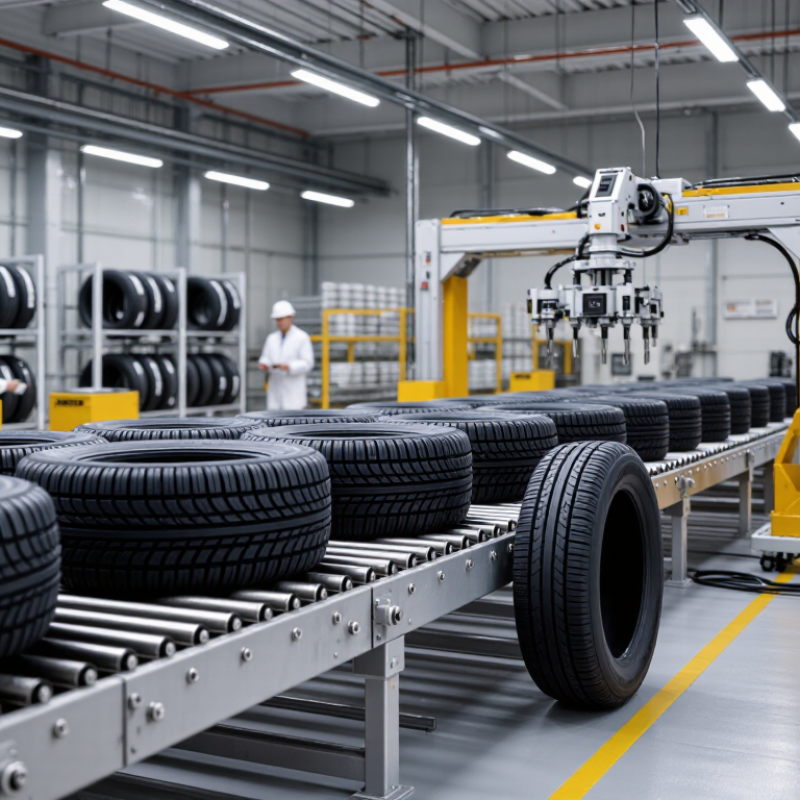
2026 Top Interior Tire Manufacturers for Global Buyers

What Interior Tire Manufacturers Produce and Why They Matter

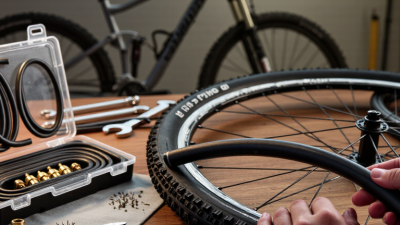
Interior tire manufacturers produce the components that sit inside, support, or protect a tire assembly. Their main products include inner tubes, tire liners, rim strips, valve stems, and protective flaps. Some factories also make custom rubber profiles for agricultural, industrial, and commercial vehicles. These parts control air retention, reduce friction, and shield tubes from sharp rim edges. A small valve defect can cause a large service problem. Small parts matter.

Reliable manufacturers work with rubber compounds, textile reinforcement, brass valves, and heat-resistant formulations. They test tensile strength, air leakage, ozone resistance, dimensional stability, and aging performance. Production teams inspect wall thickness and valve alignment during molding, not only after packing. For buyers, traceable batches provide useful evidence when field failures appear. Clear drawings and measured samples reduce mistakes between factories and installers. However, test results need context. A laboratory pass does not guarantee performance on every road, load, or rim.

Experienced suppliers discuss vehicle use, inflation pressure, temperature range, rim design, and expected mileage. They should explain material limits instead of promising universal compatibility. Packaging also matters, especially during humid port storage. Practical suppliers check moisture barriers, labeling, and spare-part availability. Buyers should compare consistency, documentation, response time, and replacement handling, not price alone. Not always. The cheapest component can become expensive after repeated downtime.

How Global Buyers Should Evaluate Tire Manufacturers

2026 Top Interior Tire Manufacturers for Global Buyers

How Global Buyers Should Evaluate Tire Manufacturers

Global buyers should assess more than price and production photos. Start with factory evidence. Review equipment age, curing controls, laboratory capability, and worker training. Ask for recent audit records, not prepared presentations. A reliable manufacturer can explain how raw materials move from receiving to shipment. Traceability should reach the production date, mold number, and test batch.

Test data matters. Request endurance, wet-grip, abrasion, uniformity, and high-speed performance results. Confirm the testing method, sample size, and laboratory independence. Check whether certifications apply to the exact factory and tire category. Current approval documents are essential. Expired certificates create avoidable customs and market risks. Sample tires should match mass-production specifications, including tread depth, sidewall markings, and compound details.

Capacity claims need practical verification. Compare monthly output with actual order history, staffing, and warehouse space. A large number on paper proves little. Visit the plant when possible. Inspect finished tires, rejected units, and complaint records. Those details often reveal more than a polished meeting. I have seen suppliers pass a document review but struggle with consistent delivery. That risk deserves attention. Buyers should also examine payment terms, replacement procedures, packaging strength, and communication during disruptions. No evaluation is perfect. A second inspection may still uncover weaknesses.

Leading Interior Tire Manufacturers for International Markets in 2026

2026 Top Interior Tire Manufacturers for Global Buyers

Leading Interior Tire Manufacturers for International Markets in 2026

Global buyers need more than attractive quotations when comparing interior tire manufacturers in 2026. Consistent rubber compounds, accurate molding, and stable curing temperatures affect fit, comfort, and service life. During supplier reviews, I look for documented batch records, calibrated gauges, and traceable material certificates. Factory cleanliness matters too. Loose dust near assembly lines can become a small defect with expensive consequences. Reliable manufacturers explain their controls clearly, rather than hiding behind broad claims.

Independent laboratory testing should verify pressure retention, heat resistance, dimensional accuracy, and aging performance. Requirements vary across climates and road conditions. For international markets, experienced producers adapt packaging, labeling, language, and shipping protection to each destination. They also understand regional compliance expectations and maintain current technical files. Still, buyers should question every certificate. Documents can be valid yet incomplete. Ask who performed the test, when it occurred, and whether the tested sample matched production stock. Price remains important, but a cheaper component may create more returns, delays, and field complaints. One weakness in this market is overconfidence: even established factories can miss a process shift. Regular audits and sample checks reduce that risk, although they never remove it.

Comparing Product Quality, Technology, Capacity, and Certifications

2026 Top Interior Tire Manufacturers for Global Buyers

For global buyers, inner-tube quality starts with rubber consistency. A 2024 market analysis by Grand View Research values the global tire market at more than USD 250 billion, increasing pressure on suppliers to reduce failures and waste. Buyers should request tensile strength, elongation, air-retention, and aging data for every batch. A tube that feels smooth may still lose pressure after repeated heat cycles. Field experience matters here.

Technology separates stable factories from ordinary ones. Automated mixing, barcode-based traceability, and computerized leak testing can reduce variation. The 2024 ISO Survey recorded more than 1.5 million ISO 9001 certificates worldwide, showing how common quality systems have become. Certification alone proves little. Audit scope, corrective-action records, and calibration logs deserve closer review. Ask for them.

Capacity should be measured through verified output, not impressive machinery photographs. Check monthly production, mold availability, warehouse conditions, and backup power. The United Nations Economic Commission for Europe requires documented performance controls for regulated tire products, while ISO 14001 supports environmental management practices. Certifications help, but they are not magic. Some factories still rely on manual inspections during peak seasons. That weakness should be stated openly in supplier evaluations. Pair laboratory results with independent pre-shipment testing. Mistakes happen. Reliable manufacturers show how they correct them.

2026 Top Interior Tire Manufacturers for Global Buyers - Comparing Product Quality, Technology, Capacity, and Certifications
Anonymized Manufacturer Profile Primary Product Coverage Quality Management Testing and Product Quality Technology Capability Indicative Annual Capacity Export and Compliance Certifications Best Fit for Global Buyers
Profile A — Integrated Passenger-Tire Manufacturer
Overall benchmark: Premium
Passenger car, SUV, crossover, and light-truck tires; summer, all-season, and winter patterns; PCR sizes commonly covering approximately 13–22 inches. High
IATF 16949-based automotive quality systems, traceable batch control, automated inspection, and documented process capability monitoring.
Indoor uniformity, balance, endurance, high-speed, bead, drum, wet-grip, rolling-resistance, and noise testing. Strong consistency across large production runs. Silica-compound development, optimized tread-pitch sequencing, finite-element design support, low-rolling-resistance construction, and automated curing control. Approximately 15–30 million tires per year across multiple production lines, depending on plant configuration and product mix. ISO 9001 IATF 16949 ISO 14001 ECE R30 ECE R117 DOT FMVSS 109/139 Global distributors, vehicle-service networks, private-label programs, and buyers requiring stable quality across multiple markets.
Profile B — OE-Oriented Multi-Segment Manufacturer
Overall benchmark: Premium
Passenger car, SUV, light commercial, and selected truck-bus applications; broad speed and load-index coverage. Very high
Formal change-management procedures, supplier audits, statistical process control, first-article approval, and strict traceability requirements.
Vehicle-level validation, wet-braking, handling, durability, high-speed, snow-performance where applicable, and laboratory compound validation. Computer-aided pattern design, rolling-resistance optimization, acoustic tuning, high-strength casing structures, and application-specific compound systems. Approximately 20–40 million tires per year across passenger and commercial product lines. IATF 16949 ISO 9001 ISO 14001 ECE R30/R54 ECE R117 DOT FMVSS Buyers seeking OE-style validation, long-term supply agreements, and products suitable for regulated automotive channels.
Profile C — High-Volume Value Manufacturer
Overall benchmark: Upper-mid market
Passenger car, SUV, light-truck, and trailer tires; strong coverage of common replacement sizes from approximately 13–20 inches. Good
Standardized work instructions, incoming-material inspection, finished-product sampling, barcode traceability, and routine process audits.
Routine endurance, uniformity, balance, bead, high-speed, and inflation-pressure testing; quality is strongest in high-volume standard sizes. Tread-compound optimization, automated building equipment, computer-controlled curing, and pattern design focused on mileage and cost efficiency. Approximately 10–25 million tires per year, with capacity concentrated in high-demand replacement sizes. ISO 9001 ISO 14001 ECE R30 DOT FMVSS 109/139 GCC or regional approvals Importers, wholesalers, online tire retailers, and private-label buyers prioritizing competitive landed cost and broad availability.
Profile D — Commercial and Truck-Bus Specialist
Overall benchmark: Premium commercial
Truck, bus, trailer, regional-haul, long-haul, mixed-service, and selected off-road commercial tires; load ranges commonly from medium to heavy duty. High
Casing traceability, retreadability assessment, compound batch control, destructive testing, and enhanced inspection of bead and belt assemblies.
Endurance, load, high-speed, heat-build-up, casing fatigue, bead durability, rolling-resistance, and irregular-wear evaluations. Reinforced belt packages, stone-ejector tread designs, optimized casing geometry, heat-resistant compounds, and retread-oriented casing engineering. Approximately 3–10 million commercial tires per year, depending on tire size, casing design, and production automation. ISO 9001 IATF 16949 ECE R54 DOT FMVSS 119 ISO 14001 Fleet operators, logistics companies, commercial distributors, public-transport suppliers, and buyers evaluating total operating cost.
Profile E — Specialty and Off-Road Tire Manufacturer
Overall benchmark: Application-focused
Agricultural, industrial, earthmover, construction, forklift, trailer, and specialty service tires, including bias and radial constructions. Good to high
Application-specific inspection plans, compound verification, carcass checks, load testing, and dimensional control for non-standard products.
Load-and-speed tests, traction evaluation, heat and fatigue testing, casing inspection, tread-wear assessment, and field validation in selected applications. Deep-lug tread engineering, puncture-resistant compounds, reinforced sidewalls, flotation designs, heat-management systems, and severe-service construction. Approximately 1–6 million tires per year, usually distributed across a wide range of low-volume specialty sizes. ISO 9001 ISO 14001 ECE R106 where applicable DOT approvals where applicable Regional machinery approvals Agricultural dealers, construction-equipment distributors, industrial fleet buyers, and specialized replacement-tire importers.
Profile F — Flexible Private-Label Manufacturer
Overall benchmark: Customizable
Passenger, SUV, light-truck, trailer, and selected commercial tires; flexible specifications for private-label and regional programs. Medium to high
Quality level depends on the manufacturing site, approved compound source, inspection frequency, minimum order quantity, and buyer audit requirements.
Standard regulatory tests are normally available; independent pre-shipment inspection and laboratory verification are recommended for new patterns. Private mold development, custom sidewall markings, pattern adaptation, compound selection, packaging customization, and small-to-medium production runs. Approximately 2–12 million tires per year, with capacity allocated among multiple private-label projects. ISO 9001 ECE R30/R54 where applicable DOT FMVSS where applicable REACH documentation Regional type approvals Importers developing their own product line, regional distributors, e-commerce sellers, and buyers needing packaging or specification flexibility.

Buyer verification note: Capacity figures are indicative industry benchmarks rather than audited company disclosures. Before purchase, request current certificates, type-approval records, production-site details, test reports, warranty terms, recent inspection records, and sample-based quality data.

How to Select the Right Interior Tire Manufacturer for Your Business

Choosing the right interior tire manufacturer starts with your actual operating conditions. Define tire size, rubber compound, temperature range, load, and expected service life. A supplier that performs well in city vehicles may fail in mining or agricultural applications. Ask for production samples made with the same materials and process as regular orders. Samples can hide problems when they receive special attention.

Check the manufacturer’s technical experience, not only its catalog. Request test records for air retention, fatigue, heat aging, dimensional stability, and valve strength. Review how workers control mixing, molding, curing, and final inspection. Traceability should connect each batch to raw materials, machines, and inspectors. It matters when a defect appears months later. Ask how the factory handles nonconforming products. A vague answer is a warning.

Capacity deserves careful verification. Confirm monthly output, lead times, mold availability, backup equipment, and packaging methods. Visit the facility if possible, but do not rely on a polished tour. I have seen clean showrooms hide inconsistent process control. Independent testing can reveal what a factory presentation misses. Compare warranty terms, replacement procedures, communication speed, and technical support. The lowest quotation may create higher costs through leakage, returns, and production delays. Also check whether the manufacturer can support your market’s documentation and quality requirements. Keep written records of every promise. People remember discussions differently.

2026 Top Interior Tire Manufacturers for Global Buyers

How to Select the Right Interior Tire Manufacturer for Your Business

For global buyers, supplier selection should prioritize product fit and durability, compliance with applicable tire and rubber standards, consistent quality control, production capacity, delivery reliability, and total purchase cost. Use these criteria as a practical evaluation framework and adjust the weighting according to your vehicle category, market regulations, and order volume.