
Leave Your Message

2026 Best Butyl Rubber Types for Global Buyers?

Choosing the best Butyl Rubber type in 2026 requires more than comparing price lists. Global buyers must match polymer performance with product design, processing conditions, and regional supply reliability. Butyl Rubber is valued for its low gas permeability, strong moisture resistance, and useful damping behavior. These properties support inner tubes, pharmaceutical closures, seals, protective liners, and technical components.

The main options include regular IIR, chlorobutyl rubber, and bromobutyl rubber. Each type behaves differently during curing and bonding. Halobutyl grades often provide improved cure compatibility and stronger adhesion than conventional IIR. However, the most advanced grade is not automatically the best choice. A buyer may need a balanced compound, not the highest specification.

Real purchasing decisions should consider Mooney viscosity, unsaturation level, cure system, ash content, packaging, and batch consistency. Request recent technical data sheets and certificates of analysis. Small differences in viscosity can affect mixing time and extrusion stability. They can also change production waste. Test samples under actual temperature, pressure, and aging conditions. Laboratory results alone may mislead.

Supplier experience matters. Reliable producers explain grade limitations instead of promising universal performance. Buyers should verify manufacturing capacity, traceability, storage practices, and technical support. Price remains important, but an unstable supply can cost more than a higher unit price. This guide compares major Butyl Rubber types for global buyers, while recognizing one practical truth: specifications on paper never replace controlled trials, careful inspection, and informed judgment. Mistakes happen. The goal is to reduce them.

2026 Best Butyl Rubber Types for Global Buyers?

What Is Butyl Rubber and Why Does It Matter in 2026?

What Is Butyl Rubber and Why Does It Matter in 2026?

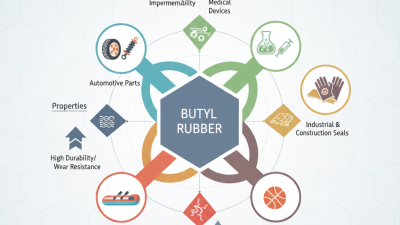
Butyl rubber is a synthetic elastomer made from isobutylene with a small amount of isoprene. Its dense molecular structure gives it very low gas and moisture permeability. That property makes it valuable for tire inner liners, pharmaceutical closures, seals, and inflatable products. It also resists ozone, weathering, and many chemicals. Performance depends on formulation, not the polymer name alone.

Global buyers commonly compare regular butyl rubber with halobutyl types, including chlorobutyl and bromobutyl grades. Halobutyl materials usually offer faster curing and stronger adhesion to rubber compounds. Regular butyl may suit less demanding sealing applications.

The correct choice depends on temperature, pressure, compression, curing system, and contact media. A small laboratory sample can reveal more than a polished sales sheet.

In 2026, responsible purchasing requires technical evidence and supply-chain transparency. Buyers should request test data for air permeability, tensile strength, compression set, ash content, and volatile matter. Batch consistency matters. So does storage history.

Rubber stored beside heat or sunlight may age before production. Sustainability claims also need verification, especially when recycled content affects purity or durability.

No grade wins every application. A specification can look complete and still hide an expensive weakness. Pilot trials remain essential, although they slow purchasing decisions.

Which Butyl Rubber Types Are Available to Global Buyers?

Global buyers can choose several butyl rubber types, each suited to different sealing or processing needs. Regular butyl rubber, or IIR, offers very low gas permeability and strong moisture resistance. It fits inner tubes, pharmaceutical closures, and airtight seals. Chlorobutyl and bromobutyl rubber belong to the halobutyl family. They usually provide faster curing and stronger adhesion to natural or synthetic rubber. Bromobutyl often supports demanding closures where chemical stability matters. Chlorobutyl can suit applications needing balanced processing and reliable barrier performance. Grade details matter.

Some suppliers also offer modified grades for low-temperature flexibility, improved damping, or controlled extrusion behavior. These options may sound attractive, but datasheets must confirm test conditions.

Buyers should compare polymer viscosity, unsaturation level, halogen content, cure system, ash, and volatile matter. Request recent test reports and representative samples.

Check packaging, storage life, batch traceability, and shipping protection. A suitable grade can still fail after heat exposure or poor warehouse handling. That lesson is easy to overlook. No type is best everywhere.

Tips: Match IIR with basic barrier needs and halobutyl grades with faster curing or stronger adhesion. Ask for ASTM or ISO test methods before comparing numbers. Confirm import requirements, technical documents, and delivery terms with the supplier. Do not select only by price. Trial production is wiser. Small formulation differences can change cure time, hardness, and seal performance.

How Do IIR, BIIR, and CIIR Compare in Performance?

IIR, BIIR, and CIIR serve different sealing priorities.
IIR offers strong air retention, good damping, and efficient processing. It remains practical for inner tubes, bladders, and general sealing parts. Grand View Research estimates the global butyl rubber market will grow at roughly 4% annually through 2030. Demand is linked closely to tires, healthcare products, and industrial seals.

BIIR and CIIR add halogen chemistry to the butyl backbone. This improves curing speed and adhesion to natural rubber compounds. Typical technical data shows halobutyl compounds can reduce air permeability by around 30–50% versus standard IIR, depending on formulation and test conditions. CIIR often supports strong moisture resistance and stable processing. BIIR can provide excellent dynamic performance in demanding tire applications.

Small differences matter.

For global buyers, temperature, cure system, and filler choice deserve close review. A low-permeability grade may still fail after repeated flexing or poor mixing. IIR can be the wiser option when cost and processing simplicity dominate. That is not always obvious. Market reports often present compound families as direct substitutes, but factory experience says otherwise. Data sheets are useful, yet pilot batches reveal the uncomfortable details: scorch time, mold fouling, and adhesion can change between suppliers. Figures from Grand View Research and Mordor Intelligence support continued market expansion, but they do not replace application testing.

What Factors Should Buyers Consider Before Choosing a Type?

Choosing a butyl rubber type starts with the application, not the lowest quotation. Conventional IIR offers strong air retention and weather resistance. Chlorobutyl and bromobutyl grades usually provide faster curing and better bonding with natural or synthetic rubber. Grand View Research estimated the global butyl rubber market at about USD 3.6 billion in 2023, with steady growth through 2030. That expansion does not make every grade interchangeable.

Buyers should compare gas permeability, cure speed, heat resistance, chemical exposure, and compression set. For inner liners, airtightness and adhesion may matter most. For pharmaceutical closures, extractables, cleanliness, and documented consistency become critical. Always review the technical data sheet, batch history, and relevant ASTM or ISO test results. A supplier’s headline value is not enough. Ask how it was measured.

Processing conditions also deserve attention. A grade that cures well in one factory may scorch during another plant’s mixing cycle. Check Mooney viscosity, filler compatibility, storage stability, and required curing agents before approval. Smithers’ 2024 global tire market analysis indicates annual tire demand will exceed three billion units before 2028, increasing pressure on cost and supply continuity. Yet cheaper material can create higher scrap rates. I have seen buyers overlook mold temperature and then blame the polymer. That mistake is common. Sustainability claims need scrutiny too; recycled content, bio-based inputs, and lower-carbon production should be supported by traceable lifecycle data, not attractive wording.

How Can Global Buyers Evaluate Suppliers and Applications?

For global buyers, butyl rubber selection should begin with application evidence, not a supplier’s product label.

Regular IIR offers low gas permeability and strong damping. Halobutyl grades improve curing compatibility and chemical resistance. They suit tire inner liners, pharmaceutical closures, hoses, and vibration seals.

The International Rubber Study Group reported continued growth in global rubber consumption through 2024, driven by mobility, healthcare, and industrial manufacturing. That demand makes supply consistency more important than a low spot price.

Ask suppliers for recent certificates of analysis, Mooney viscosity data, ash content, volatile matter, and gas-permeability results.

For medical applications, request extractables, leachables, biocompatibility, and sterilization evidence. A serious supplier should explain batch variation clearly. Check whether production follows ISO 9001, while healthcare materials may require additional quality controls.

Smithers’ global rubber market research identifies sustainability, energy efficiency, and regional supply resilience as major purchasing factors. Buyers should therefore compare carbon data, recycled-content claims, lead times, and port options.

Test samples under real conditions.

A rubber that performs well at 23°C may fail after ozone exposure or repeated compression. Do not trust one laboratory result. Independent testing is worth the cost.

I would also question unusually perfect data; real production has variation. Evaluate at least two qualified sources, confirm technical support, and review three months of delivery performance before signing a long-term agreement.