China Top Butyl Inner Tube Manufacturers for Global Buyers
China has become a major sourcing hub for reliable Butyl Inner Tube products. Its manufacturers serve bicycle, motorcycle, passenger car, truck, and agricultural equipment markets worldwide. For global buyers, the challenge is not finding a factory. It is identifying a supplier that combines stable quality, clear documentation, and responsive service.
A dependable manufacturer should understand butyl compound selection, tube thickness, valve bonding, curing temperature, and air-retention performance. These details affect how a tube performs under heat, heavy loads, and repeated inflation. Experienced factories usually maintain mold control, batch records, and inspection procedures. They may also provide samples for dimensional checks, leak testing, tensile testing, and valve inspection before mass production.
Small details matter.
Buyers should review production capacity, export experience, packaging methods, and applicable market requirements. Certifications can support confidence, but they should be verified rather than accepted at face value. A polished brochure is not proof of consistent manufacturing. Factory photographs may also show only one production moment. Direct communication, sample testing, and transparent quality agreements remain essential.
This guide examines leading China Top Butyl Inner Tube Manufacturers for Global Buyers. It considers product range, technical capability, customization options, minimum order quantities, delivery coordination, and after-sales support. No supplier is perfect, and even an experienced factory may have occasional production variation. That reality deserves attention. Careful buyers compare evidence, not promises, and build long-term partnerships through measurable standards, regular inspections, and honest feedback.
What Butyl Inner Tubes Are and Why Global Buyers Choose Them
Butyl inner tubes are made from butyl rubber, a synthetic elastomer valued for its low air permeability. In practical terms, a properly fitted tube can hold pressure between checks, reducing the need for frequent inflation. That matters on a commuter bike left overnight or a motorcycle carrying loads over uneven roads. Butyl also offers useful resistance to heat and weathering. It is not puncture-proof. Sharp debris, a damaged rim, or an incorrect tube size can still cause a flat.
Global buyers should match tube dimensions, valve type, and intended operating conditions—not rely on material alone. OICA’s 2023 production statistics recorded about 93.5 million motor vehicles worldwide. This figure is not a measure of inner-tube demand, but it shows the scale of mobility supply chains that depend on dependable components. For buyers serving bicycles, motorcycles, and equipment, consistent wall thickness and secure valve stems are practical quality checks. Small details matter. Storage matters too: prolonged heat and direct sunlight can age rubber before installation. Even a good specification may not tell the whole story; field testing under local road and temperature conditions remains important.
China Top Butyl Inner Tube Manufacturers for Global Buyers - What Butyl Inner Tubes Are and Why Global Buyers Choose Them
| Buyer Evaluation Dimension |
Relevant Product Information |
Why It Matters to Global Buyers |
| Material |
Butyl inner tubes are made from butyl rubber, a synthetic rubber based mainly on isobutylene with a small amount of isoprene. |
The material’s low air permeability helps a tube retain pressure over time compared with many natural-rubber tubes. |
| Air Retention |
Butyl rubber is commonly selected for inner tubes because it slows the passage of air through the tube wall. |
Longer pressure retention can reduce how often users need to check and reinflate tires; actual performance depends on tube construction, tire fit, and use conditions. |
| Typical Applications |
Butyl tubes are available for bicycles, motorcycles, passenger vehicles, trucks, and certain agricultural or industrial tires. |
Buyers should confirm that the tube is designed for the intended tire type and operating conditions rather than relying on material alone. |
| Size and Fit |
Tube sizing is specified to match compatible tire dimensions. Markings and size ranges vary by product and market. |
Check the tire sidewall and the supplier’s fitment information. A correctly matched tube helps prevent stretching, folding, or pinching during installation. |
| Valve Options |
Depending on the application and product range, options may include Schrader, Presta, or Dunlop-type valves, with different stem lengths and configurations. |
Confirm valve type, stem length, rim-hole compatibility, and valve position before ordering. |
| Weather and Ozone Resistance |
Butyl rubber generally has good resistance to weathering and ozone compared with many unsaturated rubbers. |
This can be useful for products exposed to changing storage or operating conditions, although appropriate storage and maintenance are still important. |
| Quality Checks |
Common production checks can include visual inspection, dimensional checks, valve attachment inspection, and inflation or leak testing. |
Ask suppliers which inspection methods and acceptance criteria they use, and whether inspection records are available for the order. |
| Order Specifications |
Key details include intended tire application, compatible size range, tube thickness or weight where specified, valve type, and packaging requirements. |
A clear specification helps reduce mismatches and supports consistent purchasing across repeat orders. |
| Bulk Purchasing |
Wholesale orders may involve production lead times, minimum order quantities, packaging choices, and export documentation requirements. |
Confirm these terms, along with sample availability and product tolerances, before placing a large order. |
Key Quality Standards for Reliable Butyl Inner Tube Manufacturing
Reliable butyl inner tubes begin with a specification that can be checked on the factory floor. Buyers should confirm tube dimensions, wall-thickness tolerances, valve position, and joint strength against agreed drawings. Small details matter. A valve that sits slightly off-centre can complicate installation, even when the tube holds air during a basic inspection.
Quality checks should cover materials and finished products. Compound batches need traceable records, while curing temperatures and times should be monitored consistently. Samples can be tested for tensile strength, elongation, and resistance to tearing using suitable, documented methods. Finished tubes should also undergo leak and valve-bond checks, with results recorded by production lot. The exact acceptance limits depend on the tube’s size and intended service; buyers should agree on them before production rather than assume one threshold fits every use. A polished report is useful, but it does not replace clear test procedures or repeatable results. Even experienced teams can miss variation between batches. That is why periodic audits and transparent corrective-action records matter as much as a single successful sample.
How China’s Leading Butyl Inner Tube Manufacturers Produce Their Products
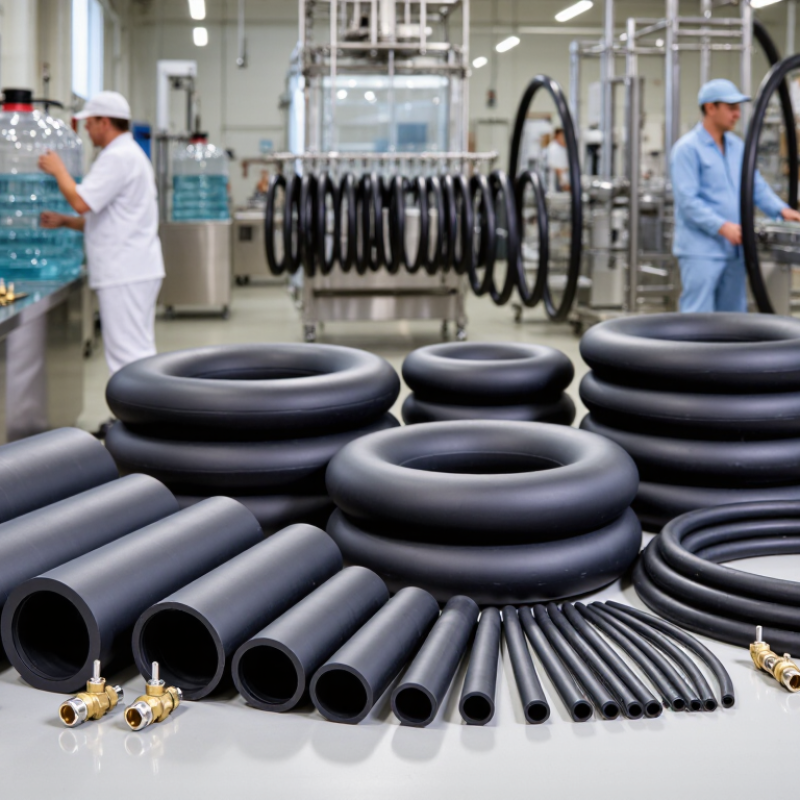
A butyl inner tube begins with rubber compound, not a finished shape. Manufacturers blend butyl rubber with selected fillers and processing ingredients, then check the mixture for consistency. Small changes in mixing can affect flexibility and air retention. This stage takes careful control. The compound is shaped into a tube through extrusion, cooled, and cut to length. Workers join the ends and fit a valve stem before vulcanization gives the tube its strength and elasticity.
Tips: Ask suppliers how they control compound consistency and inspect valve joints. Request test details for air retention, dimensions, and batch checks. A neat appearance helps, but it does not prove dependable performance.
During production, samples may be inflated and checked for leaks, while finished tubes are examined for surface flaws and dimensional variation. Packaging also matters; sharp folds or rough handling can damage a sound product. Buyers should compare test methods, not just headline specifications. Production lines are rarely flawless, and inspection cannot remove every variation. That is worth discussing openly. Clear records and responsive technical support can help identify recurring issues and guide process improvements.
How to Evaluate Chinese Suppliers for Different Vehicle Applications
A reliable Chinese inner-tube supplier should demonstrate fit by vehicle application, not just offer a long catalog. OICA’s 2024 production statistics report 93.5 million motor vehicles built worldwide in 2023, reflecting the scale and variety of vehicle requirements. For motorcycles, check tube dimensions, valve angle, and heat resistance. For trucks, ask about load-related specifications, wall thickness, and durability testing. Bicycle and agricultural applications need their own size, rim, and operating-condition checks. Small details matter.
Tip: Send suppliers the tire size, rim details, valve type, and expected operating conditions. Request samples from the production line, then verify dimensions and valve fit before approving an order. Ask for batch traceability and written test results, not only a polished product sheet. For repeat orders, confirm that the material and manufacturing process remain consistent. A sample can fit perfectly while later batches vary; I would not assume otherwise.
Compare suppliers using the same checklist and test method. Ask how they handle defects, packaging, and changes to specifications. Request evidence for claims about puncture resistance or aging, and clarify which tests support them. Where applicable, use recognized testing procedures and have a qualified laboratory assess samples. A low price may look attractive, but poor fit can mean rework and downtime. Supplier evaluation takes a little patience.
Export, Customization, and Purchasing Factors for International Buyers
For international buyers, selecting a butyl inner tube supplier involves more than comparing unit prices. Ask for clear specifications, including tube size, valve type, wall thickness, and intended tire application. Request samples and check fit, air retention, and valve placement before approving a large order. Small differences matter.
Export experience also affects the buying process. Confirm that the manufacturer can provide consistent packing details, product specifications, and shipping documents for your destination. Discuss carton markings, order quantities, lead times, and how production changes will be communicated. A polished quotation is useful, but a practical answer about delays or quality checks is more revealing.
Customization can cover dimensions, valve configurations, packaging, and labeling. Not every option is worth paying for. Compare the cost of a custom run with the likely sales volume, and ask how changes affect minimum order quantities. Buyers should also agree on inspection criteria before production, such as acceptable dimensions and sample approval. I would not assume that one successful sample guarantees every shipment will match it. Requesting batch records or inspection photos may help, though neither replaces a clear quality agreement. Trade-offs are real. A slightly longer lead time may be preferable to unclear specifications or rushed production.