Best Air Chamber Solutions for Global Buyers to Consider?
In today's global market, choosing the right air chamber solutions is crucial for businesses. These chambers play a vital role in various applications, from industrial processes to consumer products. Buyers seeking the best options must consider various factors, including durability, performance, and compatibility.
The demand for effective air chamber solutions is increasing. Companies are looking for reliable practices to enhance efficiency and reduce costs. However, navigating the options can be challenging. Many products claim to be the best. Yet, without proper knowledge, decisions may lead to ineffective solutions.
It’s essential to evaluate suppliers and their products. Understanding the technology behind air chambers can make a difference. Researching and consulting with experts can uncover valuable insights. This approach not only aids in selecting the best air chamber but also fosters long-term relationships with reliable manufacturers. In an ever-evolving market, informed choices are key to success.

Overview of Air Chamber Technology and Its Applications
Air chamber technology has found extensive applications across various industries. These chambers are designed to absorb shock, providing stability and safety in dynamic environments. In construction, air chambers act as dampers, reducing vibrations in buildings. Their ability to cushion impact makes them invaluable for equipment and machinery in warehouses.
In the automotive field, air chambers improve ride quality. They help in load carrying, ensuring comfort during transport. However, the integration of this technology can face challenges. For instance, the design of air chambers must consider the specific load capacities and environmental conditions. Inconsistent manufacturing processes may lead to reliability issues.
Innovations continue to emerge in air chamber technology. New materials enhance durability while reducing weight. Yet, there remains a need for caution. Many buyers may overlook the importance of thorough testing and validation before implementation. Ensuring that air chambers meet industry standards is crucial for performance in real-world applications.
Best Air Chamber Solutions for Global Buyers
Key Factors to Consider When Choosing Air Chamber Solutions
When selecting air chamber solutions, buyers should prioritize key factors that define their suitability. First, consider the material quality. The durability of materials impacts longevity and performance. Quality materials withstand pressure and environmental factors effectively. Understanding the manufacturing process can also provide insights into reliability and safety.
Next, assess the design specifications. Look for chambers that offer versatility in applications. Different configurations allow for customized solutions that fit specific needs. The chamber's size and capacity are vital for ensuring optimal functionality. It’s crucial to align these features with intended uses.
Another important factor is the company's support services. Reliable customer service enhances the purchasing experience. Technical assistance can be invaluable during installation and operation. Furthermore, potential buyers should investigate feedback from previous customers. These reflections often reveal insights about everyday use and performance. Choosing the right solution requires careful evaluation and attention to detail.
Comparative Analysis of Air Chamber Materials and Designs
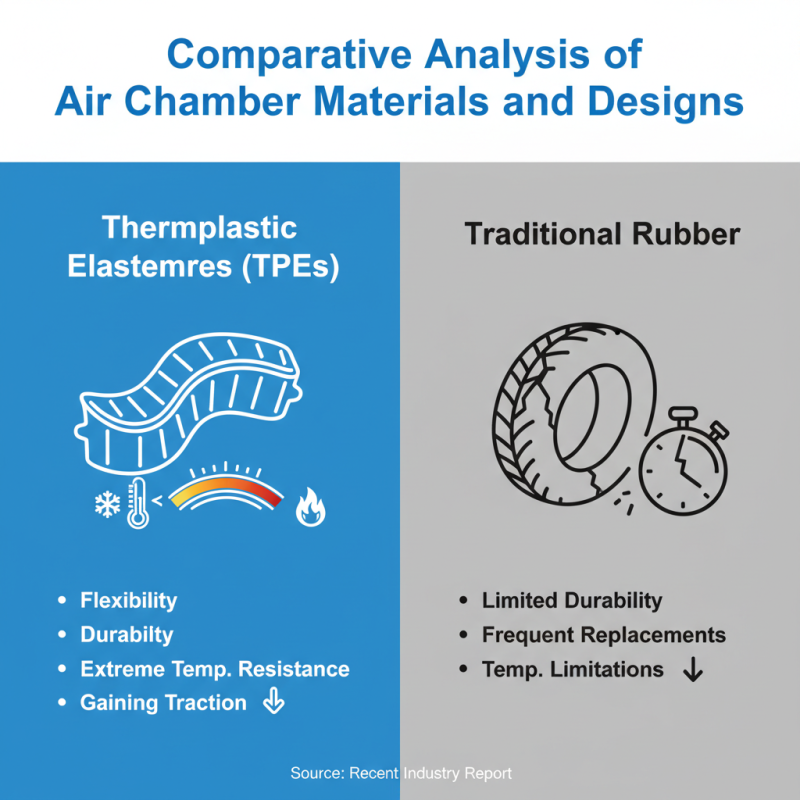
When selecting air chamber solutions, understanding the materials and designs is crucial. A recent industry report indicates that thermoplastic elastomers (TPE) are gaining traction due to their flexibility and durability. TPEs can withstand extreme temperatures, making them suitable for various applications. Conversely, traditional rubber materials tend to have limitations in durability and may require more frequent replacements.
Different designs of air chambers can significantly affect performance. For instance, innovative configurations like hexagonal or honeycomb structures enhance strength and weight distribution. According to a study by the Material Science Society, chambers with such designs can improve load-bearing capacities by up to 30%. This highlights the importance of design in enhancing functionality.
Tips: Consider the application environment before choosing materials. Understanding the temperature and pressure conditions can guide your material selection. Additionally, evaluate the design not just for efficiency, but also for ease of maintenance. Sometimes complex designs can complicate repairs. While many options exist, it's essential to recognize the trade-offs that may affect long-term reliability.
Future Trends in Air Chamber Innovation for Global Markets
The air chamber market is undergoing significant innovation. Advanced materials and design techniques are becoming the norm. These innovations promise increased efficiency and sustainability. They also focus on enhancing user experience and product longevity. For buyers, understanding these trends is crucial.
Manufacturers are exploring eco-friendly materials. Innovations in 3D printing allow for customized chambers. This personalization caters to specific market needs. However, challenges remain, such as ensuring durability without compromising flexibility. Continuous testing is vital to meet global standards.
Consumers expect more from air chambers. Enhanced functionality, like integrated sensors, is on the rise. These sensors can monitor pressure and provide real-time data. Yet, balancing technology with user-friendliness is a constant challenge. Brands must prioritize functionality while avoiding over-complication. As the market evolves, staying informed is essential for successful sourcing.